
The following paper has been published:
El siguiente artículo ha sido publicado:
El següent article ha sigut publicat:
A. Ballester-Bolinches, Luis M. Ezquerro, Alexander N. Skiba
On subgroups of hypercentral type of finite groups
Israel J. Math., 199 (2014), 259–265
http://dx.doi.org/10.1007/s11856-013-0030-y
Abstract
The main purpose of this paper is to analyze the influence on the structure of a finite group of some subgroups lying in the hypercenter. More precisely, we prove the following: Let
First announcement «Advances in Group Theory and Applications 2014 – The School» (Porto Cesareo, Italy, 3-6 June, 2014)
We are happy to forward this announcement of Francesco Catino and Francesco de Giovanni:
 Dear Colleagues,
this is the first announcement of the event
ADVANCES IN GROUP THEORY AND APPLICATIONS 2014 – THE SCHOOL
(June 3 – 6th, 2014 – Porto Cesareo, Lecce)
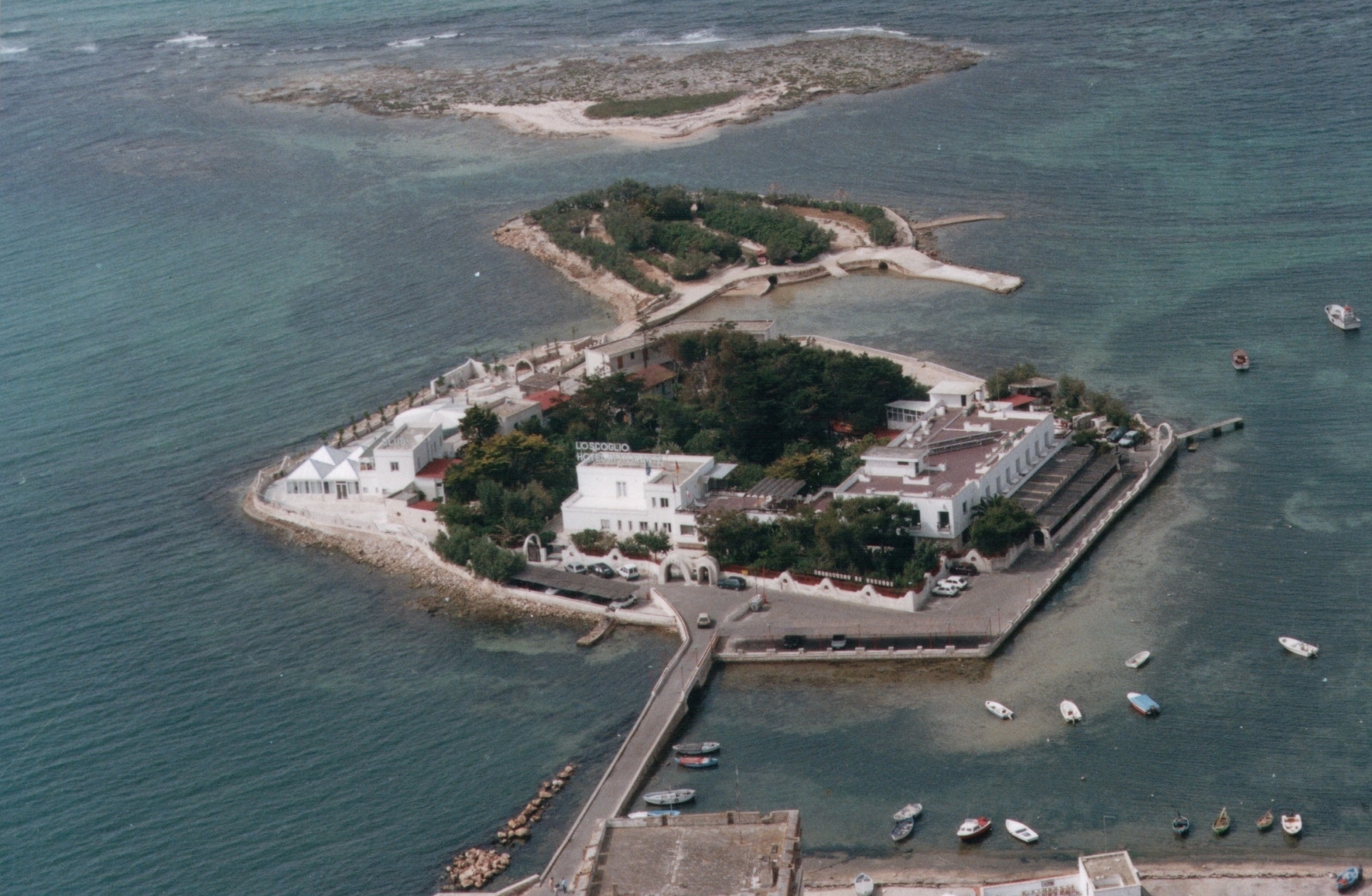
that will take place next June in Porto Cesareo, in the splendid location of the Hotel «Lo Scoglio» (the same of the conferences Advances in Group Theory and Applications 2009, 2011, 2013).
The aim of the School is to give to young mathematicians (especially to Ph.D. and post-doc Algebra students) the opportunity to attend to a series of four intensive mini-courses on advanced topics in the theory of groups and its applications, which currently deserve high research interest.
The School is directed by F. Catino and F. de Giovanni, and the following courses will be held.
- E. Aljadeff (Technion Israel Institute of Technology, Israel): Gradings on Associative Algebras, Polynomial Identities and Generic Constructions
- A. Ballester Bolinches (Universitat de Valencia, Spain): An Introduction to Fusion in Finite Groups
- V.V. Belyaev (Moscow Institute of Physics and Technology, Russia): Locally Finite Groups
- H. Laue (Mathematisches Seminar, Christian-Albrechts Universitat Kiel, Germany): General Transfer Methods in Group Theory
The number of participants will be bounded to 30. Interested young scientists from worldwide may apply until February 28th, 2014 using the form which can be found at the web address
http://poincare.unisalento.it/agta2014/application.html
and submitting their CV. The stay of participants at the School location will be fully financed by the organization. An interactive web platform will be actived in March 2014 to provide the necessary scientific backgrounds to participants.
Full information on the School can be found at the web address
http://poincare.unisalento.it/agta2014
We would be very grateful if you could make extensive use of this information in your institution.
Sincerely yours,
Francesco Catino and Francesco de Giovanni
Paper «On a problem of L.A. Shemetkov on superradical formations of finite groups» published in J. Algebra
The following paper has been published.
El siguiente artículo ha sido publicado.
El següent article ha sigut publicat.
A. Ballester-Bolinches, S. F. Kamornikov, V. N. Tyutyanov
On a problem of L.A. Shemetkov on superradical formations of finite groups
J. Algebra, 403, 69-76 (2014)
http://dx.doi.org/10.1016/j.jalgebra.2014.01.004
Abstract: Subgroup-closed saturated formations F which are closed under taking products of F-subnormal F-subgroups are studied in the paper. Our results can be regarded as further developments in the hunt for a solution of a problem proposed by L.A. Shemetkov in 1999 in the Kourovka Notebook.
MSC: 20D10, 20D20
Keywords: Finite group, saturated formation, critical group
Paper «Generalised norms in finite soluble groups» published in J. Algebra
The following paper has been published.
El siguiente artículo ha sido publicado.
El següent article ha sigut publicat.
A. Ballester-Bolinches, John Cossey, Liangcai Zhang
Generalised norms in finite soluble groups
J. Algebra, 402, 392-405 (2014)
http://dx.doi.org/10.1016/j.jalgebra.2013.12.012
Abstract: We give a framework for a number of generalisations of Baer’s norm that have appeared recently. For a class C of finite nilpotent groups we define the C-norm κC(G) of a finite group G to be the intersection of the normalisers of the subgroups of G that are not in C. We show that those groups for which the C-norm is not hypercentral have a very restricted structure. The non-nilpotent groups G for which G = κC (G) have been classified for some classes. We give a classification for nilpotent classes closed under subgroups, quotients and direct products of groups of coprime order and show the known classifications can be deduced from our classification.
MSC: 20D10, 20D20, 20D25
Keywords: Finite group, normaliser, norm
Paper «A note on Sylow permutable subgroups of infinite groups» published in J. Algebra
The following paper has been published.
El siguiente artículo ha sido publicado.
El següent article ha sigut publicat.
A. Ballester-Bolinches, S. Camp-Mora, L. A. Kurdachenko
A note on Sylow permutable subgroups of infinite groups
J. Algebra, 398, 156-161 (2014)
http://dx.doi.org/10.1016/j.jalgebra.2013.08.042
Abstract: A subgroup A of a periodic group G is said to be Sylow permutable,
or S-permutable, subgroup of G if A P = P A for all Sylow subgroups
P of G. The aim of this paper is to establish the local nilpotency
of the section A^G /Core_G( A) for an S-permutable subgroup A of a
locally finite group G.
MSC: 20E15, 20F19, 20F22
Keywords: Locally finite group, Hyperfinite group, Sylow permutability, Ascendant subgroup
Visita profesores Guo, Li y Jiang
Los profesores Guo Xiuyun (Shanghai University, Shanghai, R. P. China) y Li Yangming (Guangdong University of Education, Guangzhou, R. P. China) y la profesora Jiang Qinhui (University of Jinan, Shandong, R. P. China) visitarán el Departament d’Àlgebra de la Universitat de València y el Institut Universitari de Matemàtica Pura i Aplicada de la Universitat Politècnica de València entre el 21 de enero y el 19 de febrero de 2014. Los tres son expertos en grupos finitos y son colaboradores habituales de nuestro equipo de investigación.
Informaremos más adelante de las charlas que impartan durante su visita.
Paper «A description based on languages of the final non-deterministic automaton» accepted in Theoretical Computer Science
The paper «A description based on languages of the final non-deterministic automaton» has been accepted for publication in Theoretical Computer Science. The abstract can be found below. We will inform later about the publication details. It will be available on
http://dx.doi.org/10.1016/j.tcs.2014.01.018.
El artículo «A description based on languages of the final non-deterministic automaton» ha sido aceptado para su publicación en Theoretical Computer Science. El resumen aparece más abajo. Informaremos más adelante sobre los detalles bibliográficos. Estará disponible en
http://dx.doi.org/10.1016/j.tcs.2014.01.018.
L’article «A description based on languages of the final non-deterministic automaton» ha sigut acceptat per a la seua publicació en Theoretical Computer Science. El resum apareix davall. Informarem més endavant sobre els detalls bibliogràfics. Estarà disponible en
http://dx.doi.org/10.1016/j.tcs.2014.01.018.
Abstract: The study of the behaviour of non-deterministic automata has traditionally focused on the languages which can be associated to the different states. Under this interpretation, the different branches that can be taken at every step are ignored. However, we can also take into account the different decisions which can be made at every state, that is, the branches that can be taken, and these decisions might change the possible future behaviour. In this case, the behaviour of the automata can be described with the help of the concept of bisimilarity. This is the kind of description that is usually obtained when the automata are regarded as labelled transition systems or coalgebras.
Contrarily to what happens with deterministic automata, it is not possible to describe the behaviour up to bisimilarity of states of a non-deterministic automaton by considering just the languages associated to them. In this paper we present a description of a final object for the category of non-deterministic automata, regarded as labelled transition systems, with the help of some structures defined in terms of languages. As a consequence, we obtain a characterisation of bisimilarity of states of automata in terms of languages and a method to minimise non-deterministic automata with respect to bisimilarity of states. This
confirms that languages can be considered as the natural objects to describe the behaviour of automata.
Mathematics Subject Classification (2010): 68Q70, 68Q45, 68Q55, 18B20
Keywords: non-deterministic automaton, formal language, coalgebra, bisimilarity, final automaton.
Paper «Varieties and covarieties of languages (extended abstract)» published in Electron. Notes Theor. Comput. Sci.
The following paper has been published.
El siguiente artículo ha sido publicado.
El següent article ha sigut publicat.
Jan Rutten, Adolfo Ballester-Bolinches, Enric Cosme-Llópez
Varieties and covarieties of languages (extended abstract)
Electron. Notes Theor. Comput. Sci., 298, 7-28 (2013)
http://dx.doi.org/10.1016/j.entcs.2013.09.005
Abstract: Because of the isomorphism (X × A) → X =∼ X → (A → X), the transition structure of a deterministic automaton with state set X and with inputs from an alphabet A can be viewed both as an algebra and as a coalgebra. This algebra-coalgebra duality goes back to Arbib and Manes, who formulated it as a duality between reachability and observability, and is ultimately based on Kalman’s duality in systems theory between controllability and observability. Recently, it was used to give a new proof of Brzozowski’s minimization algorithm for deterministic automata. Here we will use the algebra-coalgebra duality of automata as a common perspective for the study of both varieties and covarieties, which are classes of automata and languages defined by equations and coequations, respectively. We make a first connection with Eilenberg’s definition of varieties of languages, which is based on the classical, algebraic notion of varieties of (transition) monoids.
Keywords: Automata, variety, covariety, equation, coequation, algebra, coalgebra.
Paper «Groups with every subgroup ascendant-by-finite» published in Cent. Eur. J. Math.
The following paper has been published.
El siguiente artículo ha sido publicado.
El següent article ha sigut publicat.
Sergio Camp-Mora
Groups with every subgroup ascendant-by-finite
Cent. Eur. J. Math., 11(12), 2182-2185 (2013)
http://dx.doi.org/10.2478/s11533-013-0312-y
Abstract: A subgroup H of a group G is called ascendant-by-finite in G if there exists a subgroup K of H such that K is ascendant in G and the index of K in H is finite. It is proved that a locally finite group with every subgroup ascendant-by-finite is locally nilpotent-by-finite. As a consequence, it is shown that the Gruenberg radical has finite index in the whole group.
MSC: 20F19, 20F22, 20F50
Keywords: Ascendant subgroup, Locally nilpotent, Radical, Locally finite group
Xarrada de divulgació professor Jean-Éric Pin/Charla de divulgación profesor Jean-Éric Pin
CONFERÈNCIA DE DIVULGACIÓ
Lloc: Saló de graus Facultat de Ciències Matemàtiques
Dijous 7 de novembre, 13 hores
Títol: Todo lo que querías saber sobre autómatas y nunca te atreviste
a preguntar
Conferenciant: Jean-Éric Pin
Resum: En aquesta xarrada, adreçada a estudiants de grau i postgrau de
matemàtiques i informàtica, es presentarà una introducció a la teoria
d’autòmats i llenguatges formals. Aquesta teoria té la seua aplicació
en àmbits com el de la lingüística, el modelat, els analitzadors
lèxics, l’enginyeria automàtica, l’especificació i verificació formal
i la lògica, entre d’altres.
La xarrada serà impartida en anglès, acompanyada d’una presentació en
castellà.
Jean-Éric Pin és director de recerca del LIAFA (Laboratoire
d’Informatique Algorithmique: Fondements et Applications, unitat mixta
de recerca del CNRS i Université Paris Diderot, Paris 7). És expert en
teoria d’autòmats i de llenguatges formals, així com en semigrups i
topologia profinita. Les seues contribucions en aquestes àrees han
sigut molt destacades. És autor de diversos llibres d’investigació
(«Variétés de langages formels», «Semigroups, Algorithms, Automata and
Languages», «Infinite words», entre d’altres) i del programa «Semigroupe»
de càlcul amb semigrups. També és autor de 145 articles de recerca en
revistes científiques i actes de congressos. Ha dirigit 22 tesis
doctorals i ha sigut investigador principal de diversos projectes
internacionals de recerca. Recentment ha coŀlaborat amb Adolfo
Ballester Bolinches (Departament d’Àlgebra) i altres membres del seu
equip de recerca.
Més informació:
http://www.liafa.jussieu.fr/~jep/
CONFERENCIA DE DIVULGACIÓN
Salón de grados Facultat de Ciències Matemàtiques
Jueves 7 de noviembre, 13 horas
Título: Todo lo que querías saber sobre autómatas y nunca te atreviste
a preguntar
Conferenciante: Jean-Éric Pin
Resumen: En esta charla, dirigida a estudiantes de grado y posgrado de
matemáticas e informática, se presentará una introducción a la teoría
de autómatas y lenguajes formales. Esta teoría tiene su aplicación en
ámbitos como el de la lingüística, el modelado, los analizadores
léxicos, la ingeniería automática, la especificación y verificación
formal y la lógica, entre otros.
La charla será impartida en inglés, acompañada de una presentación en
castellano.
Jean-Éric Pin es director de investigación del LIAFA (Laboratoire
d’Informatique Algorithmique: Fondements et Applications, unidad mixta
de investigación del CNRS y Université Paris Diderot, Paris 7). Es
experto en teoría de autómatas y de lenguajes formales, así como en
semigrupos y topología profinita. Sus contribuciones en estas áreas
han sido muy destacadas. Es autor de varios libros de investigación
(«Variétés de langages formels», «Semigroups, Algorithms, Automata and
Languages», «Infinite words», entre otros) y del programa «Semigroupe»
de cálculo con semigrupos. También es autor de 145 artículos de
investigación en revistas científicas y actas de congresos. Ha
dirigido 22 tesis doctorales y ha sido investigador principal de
diversos proyectos internacionales de investigación. Recientemente ha
colaborado con Adolfo Ballester Bolinches (Departament d’Àlgebra) y
otros miembros de su equipo de investigación.
Más información:
http://www.liafa.jussieu.fr/~jep/